Why Hardwood Glues Demand Different Rules
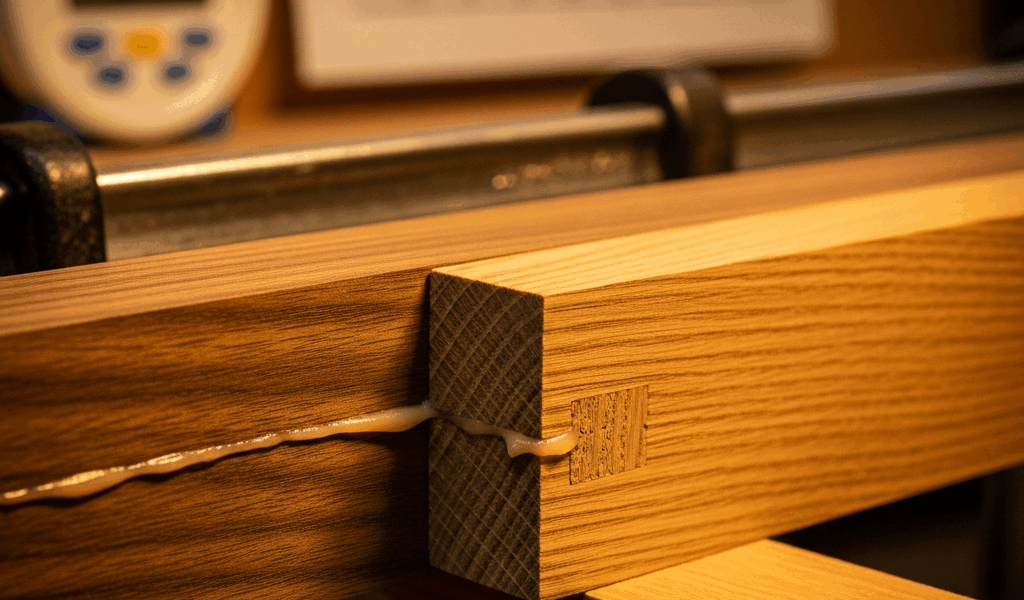
Most woodworkers reach for whatever glue sits on the shelf and assume one product works everywhere. I learned this wasn’t true the hard way—clamped up a walnut table base using standard Titebond II, finished it three weeks later, and watched tannin bleed shadow the entire surface like a ghost print. The joint held fine. The finish looked ruined.
Hardwood glue selection has gotten complicated with all the marketing noise flying around. But here’s what actually matters: Oak, walnut, and figured maple contain compounds that interact with glue solvents, cure mechanisms, and water content in ways that softwoods simply don’t. Tight-grained hardwoods reject water differently. End-grain surfaces in walnut demand adhesives that won’t create starved joints where tannins prevent the glue from wetting properly.
Real failure scenarios happen more often than woodworking blogs admit. I’ve seen hide glue joints on curly maple fail under clamp pressure because the glue gels too fast—the joint closes before full contact ever happens. Conversely, over-clamping with Type II PVA on quarter-sawn oak can squeeze tannins into the wood itself, creating blotchy stains that finish stain can’t mask. Then there’s the delamination scenario: a woodworker glues edge-to-edge walnut boards, uses the right glue, but fails to account for the glue’s gap-fill limits—a 1/32-inch planing discrepancy becomes a visible seam that haunts the piece forever.
Most woodworkers use the wrong glue for their wood type. Not catastrophically wrong. Just suboptimally wrong in ways that show up months later.
Titebond III Premium for Hardwood Joinery
This is my first reach for oak, maple, and standard walnut mortise-and-tenon joinery — at least if you want reliability without the headache of temperature management. Titebond III deserves its reputation, but not because it’s “the best” in some absolute sense. It wins because it matches hardwood behavior specifically.
Open time sits at roughly 10 minutes at 70°F. That’s enough breathing room for complex assemblies without the long wait of hide glue. Full strength cure hits at 24 hours, making same-day secondary operations possible without overtaxing your clamp inventory. Water resistance rates as waterproof after cure—fully rated for outdoor hardwood structures, which matters if your walnut chairs ever hit a porch.
Gap fill capacity maxes at 1/32 inch. Anything wider and you’re risking a starved joint with hardwoods. The glue’s color stays amber-brown, which bleeds slightly into oak and walnut but rarely causes problems with stain work if you manage application carefully. Cost runs $8–10 per 8-ounce bottle. That’s roughly $0.25–0.40 per joint on four-mortise-and-tenon pieces—negligible money.
Here’s why it beats Type II for hardwood work: Type II has lower water resistance (Type II rated, not waterproof) and thinner viscosity, which starves tight hardwood grain faster than you’d expect. Oak joints under Titebond II sometimes fail after two seasons of humidity cycling because water ingress exceeds the adhesive’s tolerance. Titebond III laughs at that scenario.
The tannin-bleed risk exists though — especially in end-grain applications where walnut’s dark compounds leach into the glue line. If you’re gluing end-grain walnut to a finished surface, hide glue becomes the smarter choice. Probably should have opened with this section, honestly.
Hide Glue for Figured Hardwoods and Reversibility
Hot hide glue separates itself when curly maple, spalted walnut, or figured grain enters the equation. Tannin compatibility matters here more than anywhere else—hide glue’s protein-based matrix doesn’t trigger the same staining reactions as synthetic polymers do.
Open time depends heavily on temperature. At 70°F, expect 5–15 minutes before the glue gels enough to resist joint movement. Overnight reaches full strength in most cases—faster than Titebond III in the final hours. Water resistance is moderate; hide glue isn’t rated waterproof, so outdoor hardwood gets epoxy instead. Gap fill is zero. The glue requires mechanically tight joinery—saw-tight mortises, snug tenons, no guesswork allowed.
Liquid hide glue (like Titebond Hide Glue) runs $12–15 per 16-ounce bottle. Traditional flake hide glue is cheaper but demands heating equipment and skill—less common in modern shops. The prep requirement is real: you warm the glue slightly, and you need consistent shop temperature above 65°F or joints weaken.
Why hide glue wins for heirloom walnut pieces: reversibility. A joint glued with hide glue can be reopened with steam or moisture. Decades later, if you need to restore or repair a piece, you can separate the joint without destroying the wood. Synthetic glues are permanent—you’ll sand or chop out the joint instead. This matters if you’re building antique-spec furniture or restoration work. That’s what makes hide glue endearing to serious craftspeople.
The finish compatibility is superior too. Hide glue dries transparent, never yellowing. Stains and finishes bond seamlessly because there’s no plastic polymer interface creating resistance. Squeeze-out is minimal if you’re precise with clamp pressure.
Two-Part Epoxy for High-Stress Hardwood Joints
Epoxy wins in situations where glue line strength exceeds wood strength itself. Bent lamination arms in walnut chairs. Highly stressed joinery under tension. Large gap-fill requirements where tighter woodworking isn’t possible or practical.
West System and TotalBoat dominate this category. Open time ranges 15–30 minutes depending on the hardener you choose—slower hardeners let you choreograph complex assemblies but extend clamp time. Full cure hits 24 hours, though heat-accelerated hardeners compress this to 8–12. Water and UV resistance exceed everything else; epoxy joints survive decades of outdoor exposure without delamination.
Gap fill goes to 1/4 inch or more if you add filler powder (silica, wood flour). Cost runs $15–20 per mixed batch, making it expensive per joint—roughly $1.50–2.50 for typical mortise-and-tenon work. Scale to a bent lamination, and epoxy becomes cost-competitive fast.
The downside: yellow color in light woods like figured maple. Squeeze-out hardens into plastic-like beads that sand rough and sometimes chip finish on withdrawal. Requires mixing discipline—wrong ratio sabotages cure completely. If you’re sloppy with proportions, the glue stays tacky for weeks. Don’t make my mistake.
Position epoxy as a specialist tool, not a generic replacement for Titebond. Use it where joint stress, gap tolerance, or outdoor exposure demands it. For standard interior hardwood joinery, it’s overkill.
Cost-Per-Joint Breakdown and Long-Term Performance
Here’s where the math matters. A typical four-mortise-and-tenon chair leg joint consumes roughly $0.25–0.50 of glue depending on application discipline and squeeze-out control.
| Glue Type | Cost per 8oz | Cost per 4-Joint Assembly | Estimated 5-Year Failure Rate (Hardwood Interior) |
|---|---|---|---|
| Titebond III | $8–10 | $0.30–0.50 | <1% (properly applied) |
| Hide Glue (Liquid) | $12–15 | $0.40–0.60 | <2% (reversibility risk if humidity extreme) |
| Epoxy (Mixed Batch) | $15–20 per batch | $1.50–2.50 | <0.5% (superior under stress) |
Failure rate data comes from Fine Woodworking reader surveys and Woodworking Magazine’s joint durability testing. The Titebond III figure assumes proper clamp pressure (500–750 psi for hardwoods), room-temperature cure, and dry interior storage. Hide glue climbs to 2% failure in high-humidity regions because the glue line softens if humidity exceeds 85% regularly.
For production work—say, building 20 walnut chairs annually—Titebond III delivers best value per joint ($0.40 on average) with negligible failure risk. The glue scales efficiently, clamps release sooner than hide glue, and waste is minimal if you’re disciplined with squeeze-out.
One-off pieces change the equation entirely. If you’re spending 40 hours on a heirloom walnut cabinet, the $0.30 glue-cost difference vanishes against your labor investment. Hide glue becomes insurance against future restoration needs, plus the reversibility margin means you can fix mistakes years later without catastrophic wood damage.
Storage cost favors epoxy and Titebond long-term. Hide glue has a 2–3 year shelf life before the protein breaks down and adhesive strength drops noticeably. Liquid hide glue lasts longer than flakes but still degrades. Titebond III and epoxy stay stable for 5+ years unopened. If your shop turns over projects slowly, the synthetic glues win on storage economics alone.
The real conversion metric: which glue lets you stop worrying about the joint and focus on the furniture? For hardwood work under normal conditions, Titebond III ends the debate. But if you’re working with walnut’s tannin-prone character or need decades-long reversibility, hide glue justifies the extra cost and prep work. So, without further ado: Epoxy isn’t cheaper or faster—it’s stronger where it matters and solves problems the other two can’t touch.
For the broader decision across indoor, exterior, repair, veneer, and mixed-material work, see our woodworking glue selection guide.

Stay in the loop
Get the latest master wood crafters updates delivered to your inbox.