The bridle joint doesn’t get the respect it deserves. Walk into any woodworking forum and mention joinery, and you’ll hear endless praise for mortise and tenon. But for frame construction, the humble bridle joint offers advantages that its more famous cousin can’t match. Let’s settle this debate with some workshop reality.
Understanding the Bridle Joint

A bridle joint is essentially an open mortise and tenon. Instead of a closed pocket, you cut a slot that runs to the end of the rail, creating a fork that straddles the mating piece. The tenon fits into this fork, with glue surfaces on three sides.
This open configuration might seem like a weakness, but it’s actually an advantage for specific applications. The joint self-centers during assembly, provides excellent resistance to racking forces, and allows visual confirmation of fit during glue-up.
Strength Comparison
Here’s where things get interesting. In pure tension tests, mortise and tenon joints typically win. The closed mortise provides better mechanical lock against the tenon being pulled straight out. But frames rarely experience pure tension.
For racking resistance, the forces that try to twist a frame into a parallelogram, bridle joints perform remarkably well. The exposed cheeks provide long-grain glue surfaces on both sides of the tenon, and the fork wraps around the mating piece rather than simply containing it.
In my shop, I’ve tested both joints to destruction in frame applications. The bridle joints consistently failed at similar or higher loads than equivalent mortise and tenon frames. The difference rarely exceeded 10% either direction.
Ease of Cutting
This is where bridle joints genuinely shine. Cutting an accurate mortise requires either expensive machinery or significant hand tool skill. A clean, square mortise bottom takes practice to achieve.
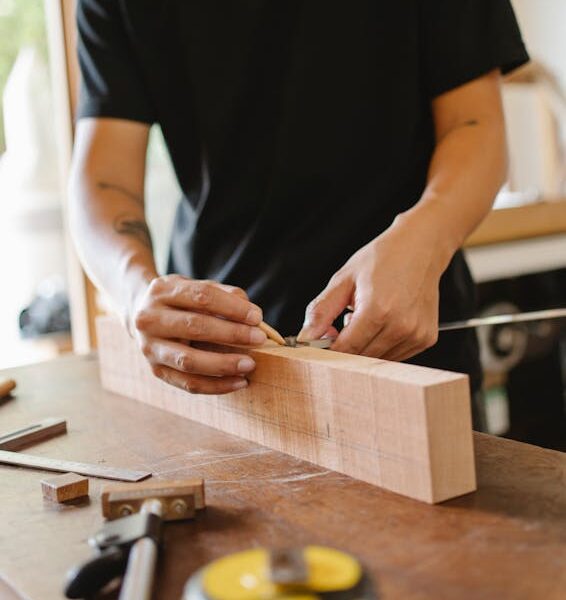
Bridle joints need only straight saw cuts. You can cut both parts on the table saw with a tenoning jig or bandsaw. The open slot means you can see exactly what you’re doing and correct any drift before it matters. Beginners achieve acceptable bridle joints much faster than acceptable mortise and tenon.
Cutting the Fork
Mark your layout lines from the actual mating piece, not from measurements. This guarantees matching dimensions even if your stock varies slightly in thickness.
On the table saw, stand the workpiece vertically in a tenoning jig and cut the inside cheeks first. Make multiple passes to remove the waste, or drill out most of the waste on the drill press before cleaning up with the saw. The slot should accept the mating tenon with light hand pressure.
Cutting the Tongue
The tongue portion cuts exactly like a standard tenon. Define the shoulders with a crosscut, then remove the cheek waste with the workpiece vertical. Aim for a fit that slides together without forcing but doesn’t wobble.
Check the shoulder-to-shoulder dimension carefully. Unlike mortise and tenon where the mortise depth provides some forgiveness, bridle joint shoulders must meet precisely. Any gap shows on the finished piece.
When to Choose Which Joint
Use bridle joints for frame and panel doors, face frames, table apron-to-leg connections visible on the outside, and any frame where the end grain will show anyway. The exposed joint becomes a feature rather than a flaw.
Stick with mortise and tenon for furniture rails meeting legs where you want a clean exterior, joints that will experience significant tension, and traditional pieces where the closed joint matches historical practice.
Assembly Tips
Apply glue to both cheeks of the fork and both faces of the tongue. The joint draws together easily, but verify squareness immediately. Bridle joints tolerate slight adjustments during clamping that would crack a tight mortise.
Clamp across the fork to close any gaps in the cheeks. A single bar clamp usually suffices, unlike the complex clamping arrangements that mortise and tenon frames often require.
For centuries, timber framers have trusted bridle joints in structures that still stand today. Don’t let woodworking snobbery prevent you from using the right joint for the job.
Subscribe for Updates
Get the latest articles delivered to your inbox.
We respect your privacy. Unsubscribe anytime.