Best Wood Glue: Complete Buying Guide for Woodworkers (2026)
Choosing the right wood glue can make or break your woodworking projects. Whether you’re building furniture, crafting cabinets, or doing quick repairs, using the best wood glue for your specific application ensures strong, long-lasting bonds. This comprehensive guide covers everything you need to know about wood glues in 2026.
Quick Recommendations
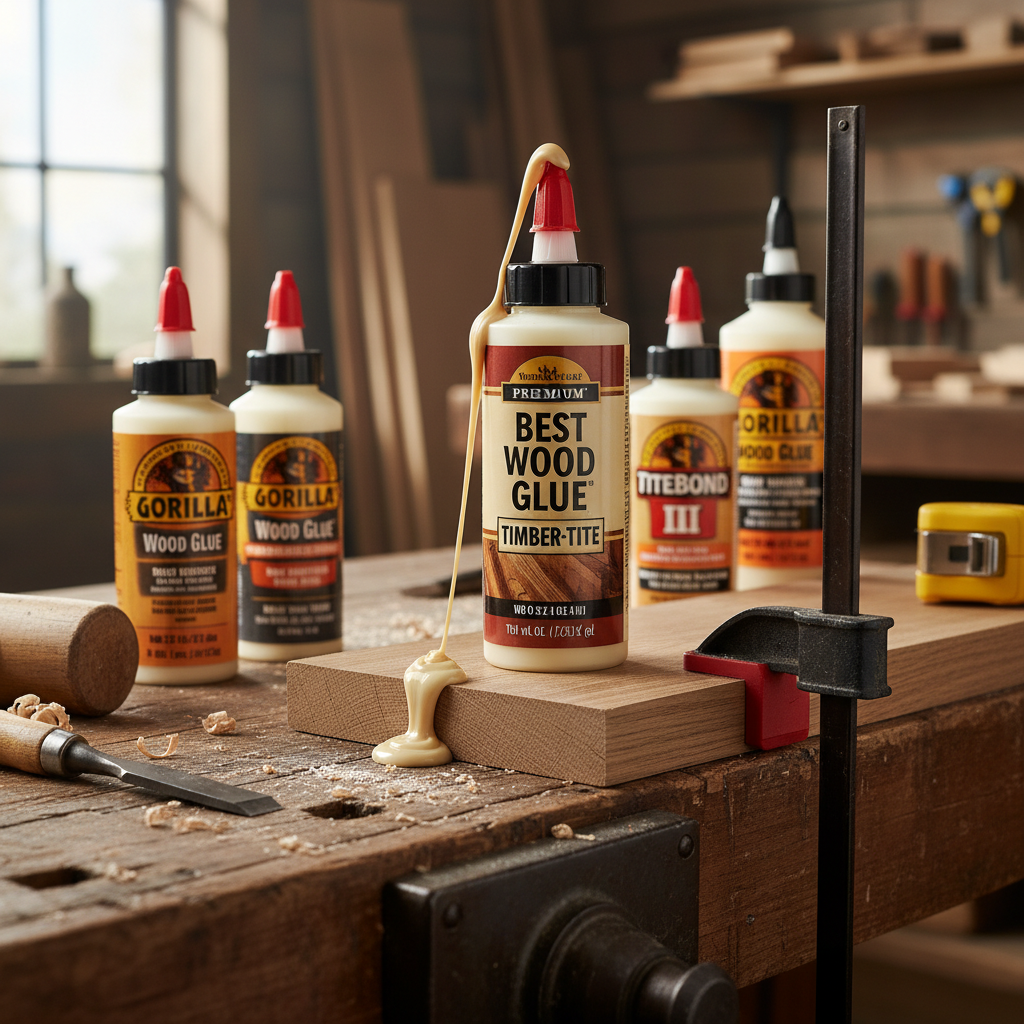
- Best Overall: Titebond III Ultimate Wood Glue
- Best for Indoor Projects: Titebond Original Wood Glue
- Best Waterproof: Gorilla Wood Glue
- Best for Quick Repairs: Elmer’s Carpenter’s Wood Glue Max
- Best Premium: Hide Glue (Traditional)
Types of Wood Glue Explained
PVA (Polyvinyl Acetate) Glue
PVA glues are the most common type used in woodworking. They’re yellow or white colored, easy to use, and create strong bonds.
Pros:
- Strong bond for most applications
- Easy cleanup with water
- Non-toxic and safe
- Dries clear or light tan
- Affordable
- Widely available
Cons:
- Not fully waterproof (Type I varieties are water-resistant)
- Limited working time (10-15 minutes)
- Requires clamping
- Not heat-resistant
Best for: Indoor furniture, cabinets, general woodworking, edge gluing
Polyurethane Glue
Polyurethane glues (like Gorilla Glue) expand as they cure, filling gaps and creating waterproof bonds.
Pros:
- 100% waterproof
- Fills gaps well
- Strong bond to various materials
- Heat resistant
- Works on slightly damp wood
Cons:
- Foam expansion can be messy
- Harder to sand
- Requires moisture to cure
- More expensive
- Shorter shelf life once opened
Best for: Outdoor projects, cutting boards, situations where gap-filling is needed
Epoxy
Two-part adhesive that creates incredibly strong bonds. Available in 5-minute, 30-minute, and longer cure formulas.
Pros:
- Strongest bond strength
- 100% waterproof
- Excellent gap-filling
- Can be shaped and sanded
- Bonds dissimilar materials
- Chemical resistant
Cons:
- Most expensive option
- Two-part mixing required
- Limited working time
- Can be difficult to remove
- Not ideal for large glue-ups
Best for: Repairs, filling cracks, bonding metal to wood, marine applications
Hide Glue
Traditional adhesive made from animal collagen. Available in liquid or granules that require heating.
Pros:
- Reversible with heat (important for antique restoration)
- Very long open time
- Minimal creep under load
- Excellent for veneering
- Traditional craftsmanship appeal
Cons:
- Requires preparation (hot hide glue)
- Not waterproof
- Shorter shelf life
- More expensive
- Learning curve
Best for: Fine furniture, antique restoration, musical instruments, veneering
Cyanoacrylate (CA Glue)
Super glue for woodworking. Available in thin, medium, and thick viscosities.
Pros:
- Nearly instant bond
- No clamping required
- Works on small, intricate parts
- Clear finish
- Good for filling small cracks
Cons:
- Expensive for large areas
- Brittle (can crack under stress)
- Very short working time
- Bonds skin instantly (safety concern)
Best for: Small repairs, turning projects, inlay work, stabilizing wood
Top 10 Best Wood Glues in 2026
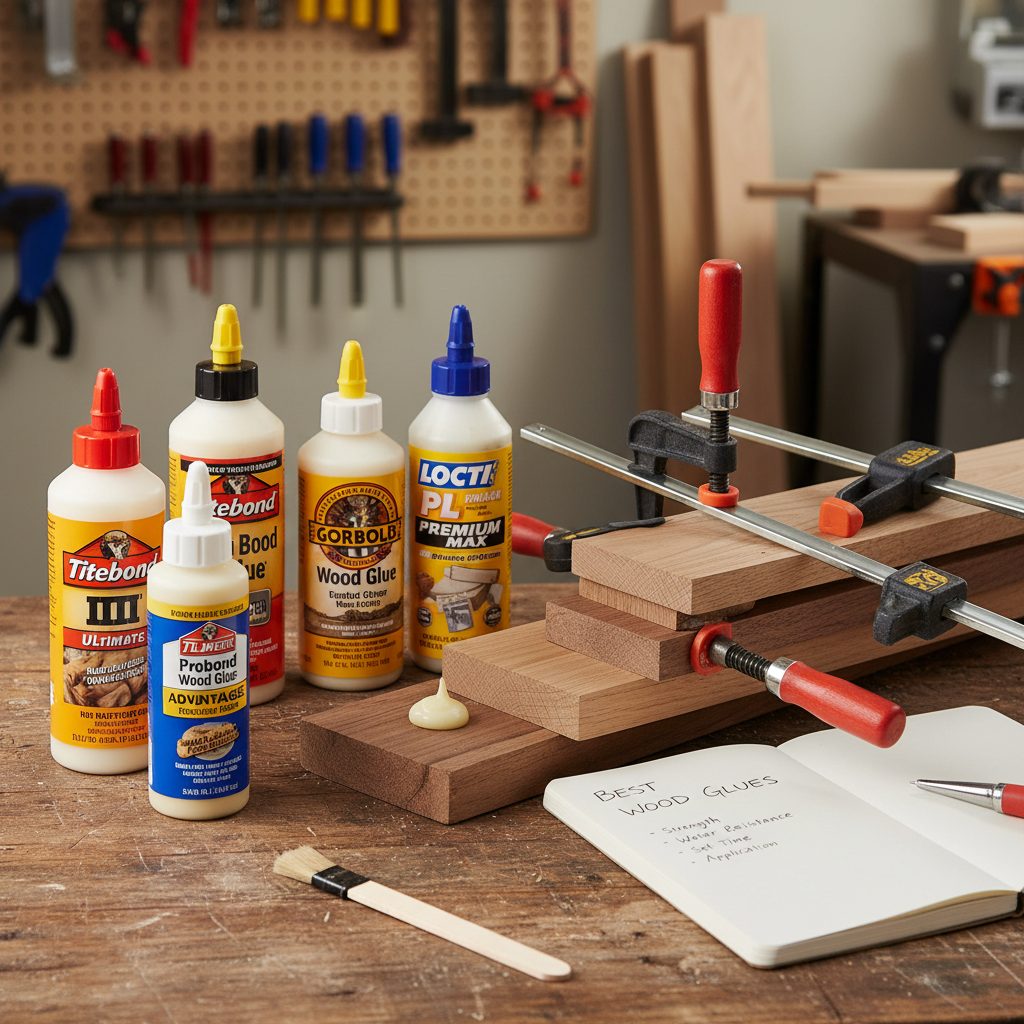
1. Titebond III Ultimate Wood Glue – Best Overall
Price: $8-12 for 16 oz
Type: Type I PVA (waterproof)
Clamp Time: 30 minutes
Full Cure: 24 hours
Why it’s the best: Titebond III offers the perfect balance of strength, waterproof performance, and ease of use. It passes ANSI Type I water-resistance standards, making it suitable for both indoor and outdoor applications. The bond is stronger than the wood itself, and it maintains flexibility to prevent joint failure.
Pros:
- Fully waterproof (ANSI Type I)
- Excellent strength
- Longer open time than Titebond II (10 minutes)
- Non-toxic and FDA approved for indirect food contact
- Cleans up with water
- Works in temperatures as low as 47°F
Cons:
- Slightly more expensive than Titebond Original
- Longer cure time than faster-setting alternatives
Best for: Outdoor furniture, cutting boards, any project requiring waterproof bonds
2. Titebond Original Wood Glue – Best Budget Option
Price: $6-9 for 16 oz
Type: PVA (Type II water-resistant)
Clamp Time: 30 minutes
The classic yellow glue that’s been a workshop staple for decades. Not fully waterproof, but perfect for indoor projects.
Best for: Indoor furniture, cabinets, general woodworking on a budget
3. Gorilla Wood Glue – Best for Gap Filling
Price: $7-10 for 18 oz
Type: PVA
Clamp Time: 20-30 minutes
Gorilla’s PVA formula is water-resistant and has excellent gap-filling properties. Dries to a natural wood color.
Best for: Joints with slight gaps, projects needing water resistance
4. Gorilla Original Polyurethane Glue – Best Waterproof
Price: $10-15 for 18 oz
Type: Polyurethane
Clamp Time: 1-2 hours
The original expanding glue. 100% waterproof and bonds to virtually anything.
Best for: Outdoor projects, exotic woods, bonding different materials
5. West System G/flex Epoxy – Best for Repairs
Price: $25-35 for 8 oz kit
Type: Two-part epoxy
Working Time: 45 minutes
Professional-grade epoxy with excellent gap-filling and highest bond strength.
Best for: Structural repairs, filling large cracks, bonding dissimilar materials
6. Elmer’s Carpenter’s Wood Glue Max – Best Fast-Setting
Price: $5-8 for 16 oz
Type: PVA
Clamp Time: 5 minutes
Sets faster than traditional wood glues while maintaining strong bonds.
Best for: Quick repairs, projects where fast turnaround is needed
7. Old Brown Glue (Liquid Hide Glue) – Best Traditional
Price: $15-20 for 16 oz
Type: Hide glue
Clamp Time: Variable (long open time)
Ready-to-use liquid hide glue with all the benefits of traditional hot hide glue.
Best for: Fine furniture, antique restoration, musical instruments
8. System Three T-88 Structural Epoxy – Best Marine Grade
Price: $30-40 for 8 oz kit
Type: Two-part epoxy
Working Time: 60 minutes
Marine-grade epoxy used in boat building. Extremely strong and waterproof.
Best for: Outdoor structures, marine applications, structural repairs
9. FastCap 2P-10 – Best Instant Bond
Price: $25-30 for 2 oz kit
Type: CA glue + activator
Working Time: Seconds
Professional-grade CA glue system with activator spray for instant bonds.
Best for: Small repairs, turning, situations requiring instant bonds
10. Titebond Polyurethane Liquid Hide Glue – Best Specialty
Price: $12-18 for 16 oz
Type: Liquid hide glue
Clamp Time: 30 minutes
Combines traditional hide glue benefits with modern convenience.
Best for: Fine woodworking where reversibility is desired
How to Choose the Right Wood Glue
Consider These Factors:
1. Indoor vs. Outdoor Use
- Indoor only: Titebond Original, Elmer’s Carpenter’s
- Outdoor: Titebond III, Gorilla Polyurethane, marine epoxy
2. Waterproof Requirements
- Water-resistant (Type II): Titebond II, Titebond Original
- Waterproof (Type I): Titebond III, polyurethane glues, epoxy
3. Joint Type
- Tight joints: Any PVA glue
- Loose joints/gaps: Polyurethane, epoxy, gap-filling PVA
- End grain: Epoxy (PVA doesn’t bond well to end grain)
4. Working Time Needed
- Complex glue-ups: Titebond Extend (longer open time), hide glue
- Quick projects: FastCap 2P-10, Elmer’s Max
5. Food Safety
- Cutting boards, bowls: Titebond III (FDA approved), food-safe epoxy
Wood Glue Application Tips
Proper Application Technique
- Surface Preparation: Surfaces should be clean, dry, and freshly cut/sanded
- Application: Apply thin, even coat to both surfaces
- Spread: Use brush or stick to spread glue evenly
- Assembly: Join pieces quickly (within open time)
- Clamping: Apply even pressure across entire joint
- Squeeze-out: Wipe away excess with damp cloth or wait until rubbery, then remove with chisel
- Cure Time: Allow full cure before removing clamps (24 hours for most)
Common Mistakes to Avoid
- Too much glue: Excess doesn’t add strength and creates messy squeeze-out
- Not enough clamp pressure: Starved joints fail
- Too much clamp pressure: Squeezes all glue out, also causes weak joints
- Removing clamps too soon: Joint hasn’t gained full strength
- Using wrong glue type: Not all glues work for all applications
FAQs About Wood Glue
Is wood glue stronger than wood?
Yes! Quality wood glues like Titebond create bonds stronger than the wood fibers themselves. Properly glued joints will break in the wood, not the glue line.
How long does wood glue last?
Unopened bottles last 1-2 years. Once opened, PVA glues last 12-18 months if stored properly. Polyurethane glues have shorter shelf lives once opened (6-12 months).
Can you sand wood glue?
Yes, once fully cured. PVA glues sand easily. Polyurethane glues and epoxies are harder to sand but can be done.
Does wood glue need clamps?
Most wood glues require clamping pressure for optimal bonds. CA glue is the main exception.
Is Gorilla Glue better than Titebond?
It depends. Gorilla Polyurethane is better for outdoor/waterproof needs and gap-filling. Titebond is better for clean, precise indoor work.
Conclusion
The best wood glue for your project depends on your specific needs. For most woodworkers, keeping these three on hand covers nearly every situation:
- Titebond III – Your go-to for most projects
- Epoxy – For repairs and specialty applications
- CA glue – For small, quick fixes
Choose based on whether you need waterproof performance, how much working time you need, and whether your joints are tight or have gaps. With the right glue and proper technique, your woodworking projects will last for generations.


Stay in the loop
Get the latest wildlife research and conservation news delivered to your inbox.