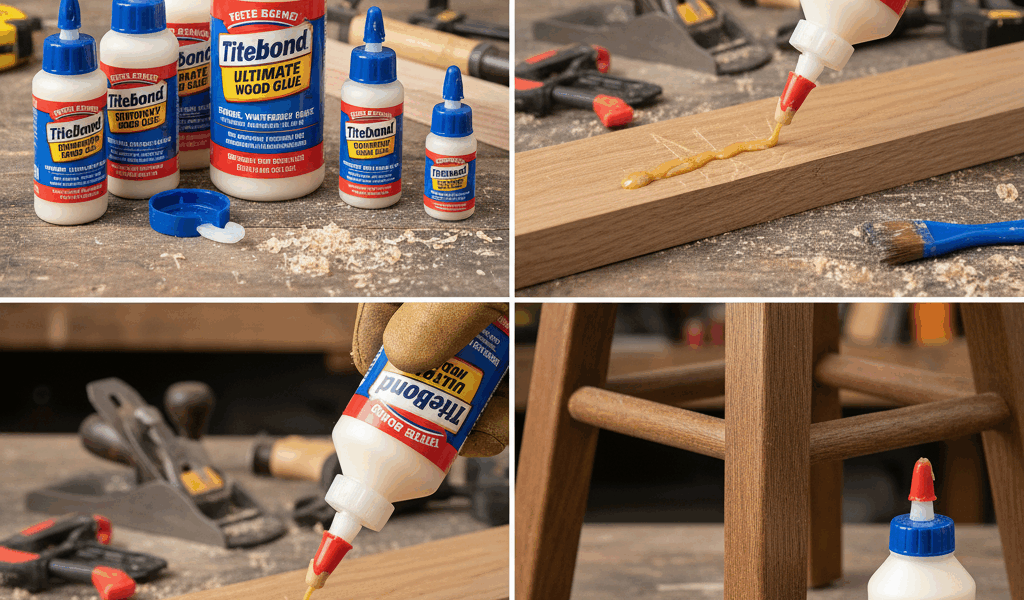
Wood glue selection has gotten complicated with all the bottles lined up on hardware store shelves. As someone who’s used all three Titebond formulas for years, I learned everything there is to know about which one actually matters for which job. Today I’ll cut through the marketing and tell you what you really need.
Titebond Original (I)

The classic yellow glue has earned its reputation over decades. It sets faster than the others—typically 30 minutes to an hour—which speeds production but limits open assembly time. If your joints are complex and need careful positioning, this quick set becomes a liability.
Original provides excellent initial tack, grabbing wood quickly during clamping. Dried glue sands easily without gumming—important for any joint with potential squeeze-out on visible surfaces. It’s also the least expensive option.
Use Original for indoor furniture, jigs, and workshop projects. Anything staying climate-controlled that never sees significant moisture is a candidate. Don’t use it for outdoor projects, even under cover.
Titebond II Premium
The water resistance of Type II allows outdoor use where the joint won’t be continuously wet or submerged. Covered porches, window frames with proper finish, exterior doors—all fall into this category. It’s not waterproof but handles occasional moisture exposure.
Open time extends to about 10 minutes versus 5-6 for Original. That extra time matters for complex assemblies but remains relatively short compared to specialized products. You still need to work efficiently.
Titebond II passes the ANSI Type II water resistance spec, requiring survival through cycles of soaking and drying. For reference, this exceeds exposure most covered outdoor furniture ever faces.
Titebond III Ultimate
That’s what makes III the workhorse for us woodworkers who build anything wet—it’s essentially waterproof after full cure. Cutting boards, outdoor furniture with direct rain exposure, marine applications all call for Type III.
Open time extends to 10 minutes, and glue remains workable longer. The extended time comes from slower set, which means longer clamp time—typically 24 hours for full strength versus overnight for I and II.
The formula is FDA approved for indirect food contact after curing, making it standard for cutting boards and kitchen utensils. While Original is also FDA compliant, III’s waterproof nature better survives repeated washing.
Temperature Considerations
All three require minimum application temperatures, and they differ significantly. Original works down to 50°F. Titebond II needs 55°F. Titebond III requires just 47°F, giving it an advantage in cold shops.
Cold glue applied to cold wood doesn’t penetrate properly, creating weak joints that fail unpredictably. If your shop temperature is marginal, bring both glue and workpieces inside to warm before assembly.
Color and Visibility
Original dries to honey-amber that can show through light-colored woods. Titebond II dries similarly. Titebond III dries darker, approaching brown—more visible in light species but less noticeable in walnut or dark oak.
For joints where squeeze-out might remain visible, test on scrap in your actual species. Wrong glue color creates an amateur-looking line that no amount of stain completely hides.
Making the Choice
Probably should have led with this: most shop furniture and indoor pieces work fine with Original. The faster set actually helps when you want to continue working. Keep a bottle as your everyday glue.
Stock Titebond III for any project involving water exposure or food contact. Higher cost is marginal per joint and eliminates worry. When in doubt, III gives you peace of mind.
Titebond II occupies a middle ground fewer projects actually need. Building outdoor furniture? Use III. Indoor only? Original works fine. II is best for specific situations where cost matters and exposure is limited to occasional moisture.


Stay in the loop
Get the latest master wood crafters updates delivered to your inbox.