Dado Joint Guide

The Workhorse of Cabinet Joinery

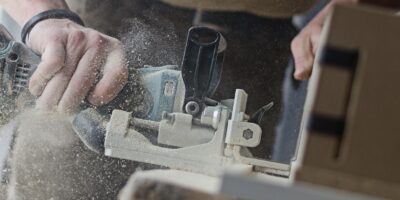
Woodworking technique demonstration
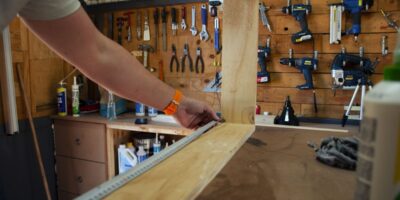
Professional woodworking technique

The dado joint is foundational to cabinet and bookshelf construction. This simple but effective joint consists of a channel cut across the grain of one board, into which the edge of another board fits. When you look at the sides of a bookcase and see how the shelves are recessed into the uprights, you are seeing dado joints at work. They provide excellent support for weight-bearing applications while being relatively straightforward to cut.

Understanding Dado Joint Mechanics

Unlike joints that rely primarily on glue, dadoes provide significant mechanical support. The shelf or divider sits in its channel with the weight distributed across the full width of the groove. This makes dadoes particularly suitable for shelving applications where books, equipment, or other heavy items will stress the joint. The glue adds strength, but the physical interlocking does most of the heavy lifting.

Types of Dado Joints

The through dado runs the full width of the board and is visible at both edges—quick to cut but shows as a visible line on the front edge of your project. The stopped dado ends before reaching one or both edges, hiding the joint while maintaining structural integrity. The blind dado stops before reaching the front edge, requiring a corresponding notch in the shelf. Each variation trades visibility against complexity of cutting and fitting.

Cutting Dadoes on the Table Saw

Using a Dado Stack

A stacked dado set consists of two outer blades and multiple chippers that combine to create the desired width. The advantage is clean, flat-bottomed cuts in a single pass. Set the width by combining chippers until you match your shelf material thickness—accounting for the fact that plywood is rarely its stated thickness. A 3/4 inch sheet is typically closer to 23/32 inch.

Depth Settings

Standard practice sets dado depth at one-third to one-half the thickness of the receiving board. For 3/4 inch cabinet sides, that means 1/4 to 3/8 inch deep. Deeper dadoes provide more support but weaken the receiving board. Shallower dadoes may not provide adequate bearing surface for heavy loads. The one-third rule works well for most furniture applications.

Using a Standard Blade

Without a dado stack, you can cut dadoes using multiple passes with a standard blade. Mark both edges of the dado, make cuts at each edge, then make additional passes to remove the waste between them. This method is slower but eliminates the need for specialized tooling. The bottom may require cleanup with a chisel or router plane.

Router Methods

Handheld Router with Edge Guide

A straight bit in a handheld router, guided by an edge guide or a clamped straightedge, produces clean dadoes with excellent depth control. Set the bit depth, lock it, and make the cut in one or two passes depending on depth. The edge guide ensures consistent spacing from the board edge, while the flat bottom of the bit produces a clean groove floor.

Router Table Approach

For multiple identical dadoes, a router table with a fence and stop blocks provides efficient, repeatable results. Set up your stops once, then run multiple workpieces through with consistent results. This method excels for batch production of cabinet components or modular shelving systems.

Fitting and Assembly

The ideal fit allows the shelf to slide into the dado with firm hand pressure. Too tight risks splitting the dado walls during assembly; too loose reduces both strength and appearance. Test the fit with scrap material of identical thickness before cutting project pieces. When the fit is correct, apply glue to the dado walls, insert the shelf, and clamp until cured.

Reinforcement Options

For additional strength, dadoes can be combined with screws from the outside, hidden by plugs. Face frames on cabinets hide the front edge of through dadoes while adding structural reinforcement. In demanding applications, a shallow rabbet on the shelf edge creates a locking ledge that increases the effective glue surface.

David Chen

David Chen

Author & Expert

David Chen is a professional woodworker and furniture maker with over 15 years of experience in fine joinery and custom cabinetry. He trained under master craftsmen in traditional Japanese and European woodworking techniques and operates a small workshop in the Pacific Northwest. David holds certifications from the Furniture Society and regularly teaches woodworking classes at local community colleges. His work has been featured in Fine Woodworking Magazine and Popular Woodworking.

69 Articles
View All Posts

Subscribe for Updates

Get the latest articles delivered to your inbox.